A new video produced under the EU-funded Intra-ACP Support Programme for OACPS Small Island Developing States (SIDS) is shining a spotlight on one of the most pressing challenges facing island nations today: how to mobilise the financial resources needed to protect biodiversity, strengthen climate resilience, and secure sustainable development.
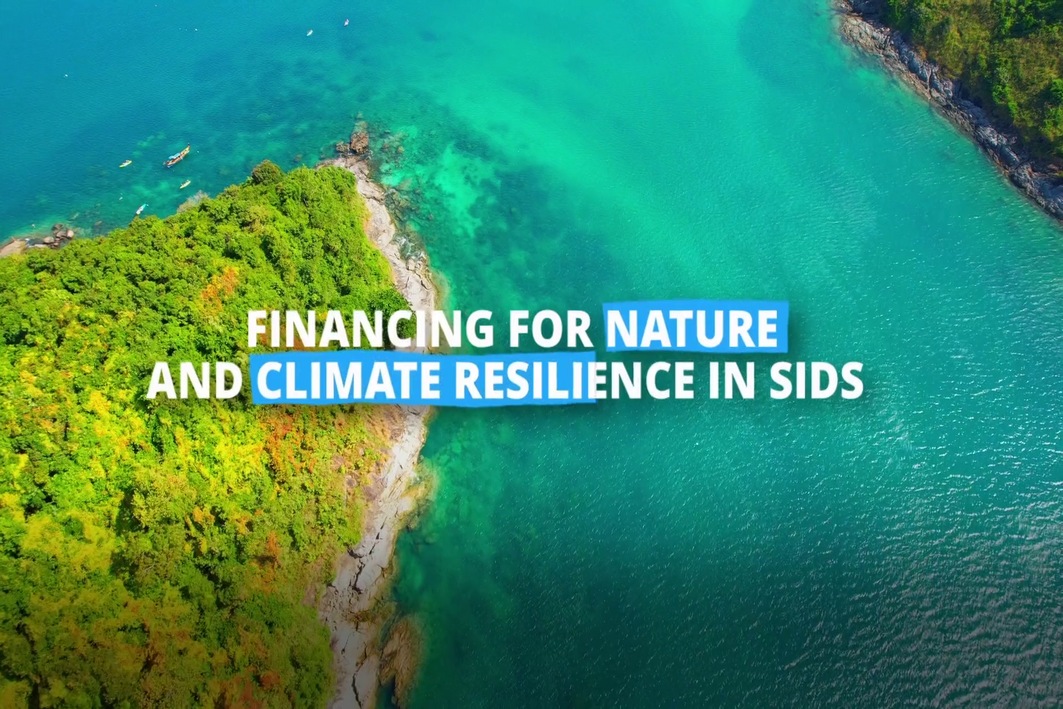
Titled “Financing for Nature and Climate Resilience in SIDS”, the video brings together voices from across Africa, the Caribbean and the Pacific to demonstrate why nature is not simply an environmental concern, but a critical economic asset for island nations. Through a combination of expert interviews, compelling visuals and on-the-ground examples, the film explores the growing need for innovative approaches to climate and biodiversity finance.
The video begins by challenging common perceptions of Small Island Developing States. While often associated with pristine beaches and vibrant marine ecosystems, SIDS rely on nature for far more than tourism. Coral reefs, mangroves and seagrass meadows provide essential services, including coastal protection, fisheries production, freshwater regulation and carbon storage. These ecosystems act as natural infrastructure, underpinning national economies and supporting the livelihoods of millions of people.
At the same time, these natural assets are increasingly threatened by rising sea temperatures, ocean acidification, biodiversity loss and more intense storms. The degradation of coastal and marine ecosystems is reducing the resilience of island communities that are already among the most vulnerable to climate change.
According to Marie-May Jeremie, Chief Executive Officer of the Seychelles Conservation and Climate Adaptation Trust (SEYCCAT), the urgency of the situation cannot be overstated. "There is urgency in the biodiversity that is being lost every day. There's massive coral bleaching just last year back home. There is an urgent need for these kinds of upscaling to happen today, now."
The film also highlights the unique vulnerabilities faced by SIDS. Small populations, limited land areas and high exposure to climate-related disasters leave many island economies exposed to shocks that can reverse years of development gains. As Gina Bonne of the Indian Ocean Commission explains, the consequences can be devastating: "We can mobilize funds and work for 10 years to build up our capacity and industries. But just one cyclone overnight can wipe out everything."
A central message of the video is that biodiversity conservation and economic development should no longer be viewed as competing priorities. Instead, nature should be recognised as an asset capable of generating social, economic and environmental returns. The decline of ecosystems can have significant economic consequences, with losses affecting fisheries, tourism, employment and national resilience.
The film argues that addressing these challenges requires a significant increase in investment. Yet many SIDS face serious barriers to accessing finance. Although highly vulnerable to environmental and economic shocks, many are classified as middle-income countries and therefore have limited access to concessional funding. At the same time, rising debt burdens constrain governments' ability to borrow further.
Emmanuel Chamberlain of the OECS BioSpace Programme describes this dilemma in stark terms: "Because of our large loan portfolio, we do not have the fiscal space. Taking loans upon loans is not sustainable, it is no longer possible."
To address this financing gap, the video explores a range of innovative financial instruments. Blended finance, concessional funding, blue economy investments, biodiversity funds and other mechanisms are presented as potential pathways for mobilising resources while reducing reliance on debt-financed development.
Sandra Freitas, climate and biodiversity finance expert with the AESA Consortium, stresses the importance of tailoring financial solutions to the specific realities of island states: "Most of them are middle-income countries and usually do not benefit from concessional resources. It is all about concessionality and instruments that will not prioritize debt."
The video is part of a broader effort by the OACPS SIDS Support Programme to foster greater access to climate and biodiversity finance. A new resource mobilisation initiative presented during the 2025 United Nations Ocean Conference seeks to identify and activate innovative finance pathways across the African, Caribbean and Pacific regions. The initiative brings together regional partners including the Critical Ecosystem Partnership Fund (CEPF), the Organisation of Eastern Caribbean States (OECS), and the Secretariat of the Pacific Regional Environment Programme (SPREP).
Speaking on behalf of the European Commission, Nadia Deckert emphasises the importance of ensuring that SIDS are able to access the resources needed to implement their national and international commitments: "The EU recognizes that access to climate and biodiversity financing is and will remain a critical enabler for SIDS to implement their national priorities and international commitments."
The film concludes on a note of optimism. Across all three regions, successful conservation and resilience initiatives are demonstrating that effective solutions already exist. What is needed now is greater investment, stronger partnerships and the political will to scale up proven approaches. As Carlo Iacovino of SPREP notes: "We have the pathway and the enthusiasm to upscale."
By bringing together diverse perspectives from government institutions, regional organisations, conservation practitioners and development partners, Financing for Nature and Climate Resilience in SIDS presents a compelling case for viewing nature not as a cost, but as an investment in resilience, prosperity and sustainable development. At a time when climate and biodiversity crises are accelerating, the video offers a timely call to action to ensure that island nations have the financial tools they need to protect the ecosystems upon which their future depends.
VIEW VIDEO REPORTAGE